Forgiving Doesn’t Mean Forgetting
Originally posted on Diocesan.com
In Matt 18:21-35, Margaret discusses the difference between forgiving and forgetting.
I love the scene in The Chosen that tells this story. Peter makes no bones about how resentful he is of Matthew and his tax-collecting ways. Grappling with his unavoidable relationship with Matthew, Peter confides his struggles to Jesus. Jesus, loving both Matthew and Peter, sees both sides. Both hearts. He shows Peter how in his pain, he sinned. Then shows how those sins contributed to the difficult situation with Matthew.
Our Wounds Cause Us to Hurt Others
It is a vicious cycle. Someone hurts me. In pain, I can hurt someone else. The one I hurt then hurts me again or someone else. We can struggle to see the big picture. But Jesus sees it.
Maybe this is why, in the Lord’s prayer, Jesus tells us:
“Forgive us our sins as we forgive those who sin against us”.
One sentence. I never noticed this before. Forgiving and being forgiven must go together. Our own sins are entangled in sins against us. We do not get a “pass” on our sins simply because the other person’s sins may be worse. This means we must change our focus to see our own sins, no matter how small.
Forgive 77 Times
When we are hurting, this can seem daunting. But think about how many times you have asked for God’s forgiveness. Think of how many times you have said The Lord’s Prayer over the last week. The last year. Your lifetime. How many times you have gone to confession? How many Acts of Contrition you have made? Has Jesus forgiven you 77 times? We can get to that number quickly even just praying the Our Father each day. God is constantly forgiving us.
Forgiving not Forgetting
It does not mean that we have to live as if it never happened. Even in this gospel, while the Master forgave his servant, he did not forget. The Lord’s Prayer tells us to forgive others, but says nothing about forgetting. Forgiveness is a decision made in the heart but it does not erase the wounds or the memory. In fact, we don’t possess the power to not feel an offense or “magic” the hurt away from our mind and heart.
However, we can empower ourselves by practicing virtue. The repetitive act of forgiving people their smaller transgressions can strengthen our heart to tackle forgiving the hard things when they come. By cultivating the virtue of forgiveness, we can learn to let the faults of others slide over us. In this way, we can realize what we can control. We can gain peace. We can allow ourselves to be loved by our Lord and Savior. Soon, our wounds can begin to heal.
Margaret Gartlgruber
Is there someone in your life you struggle to forgive?
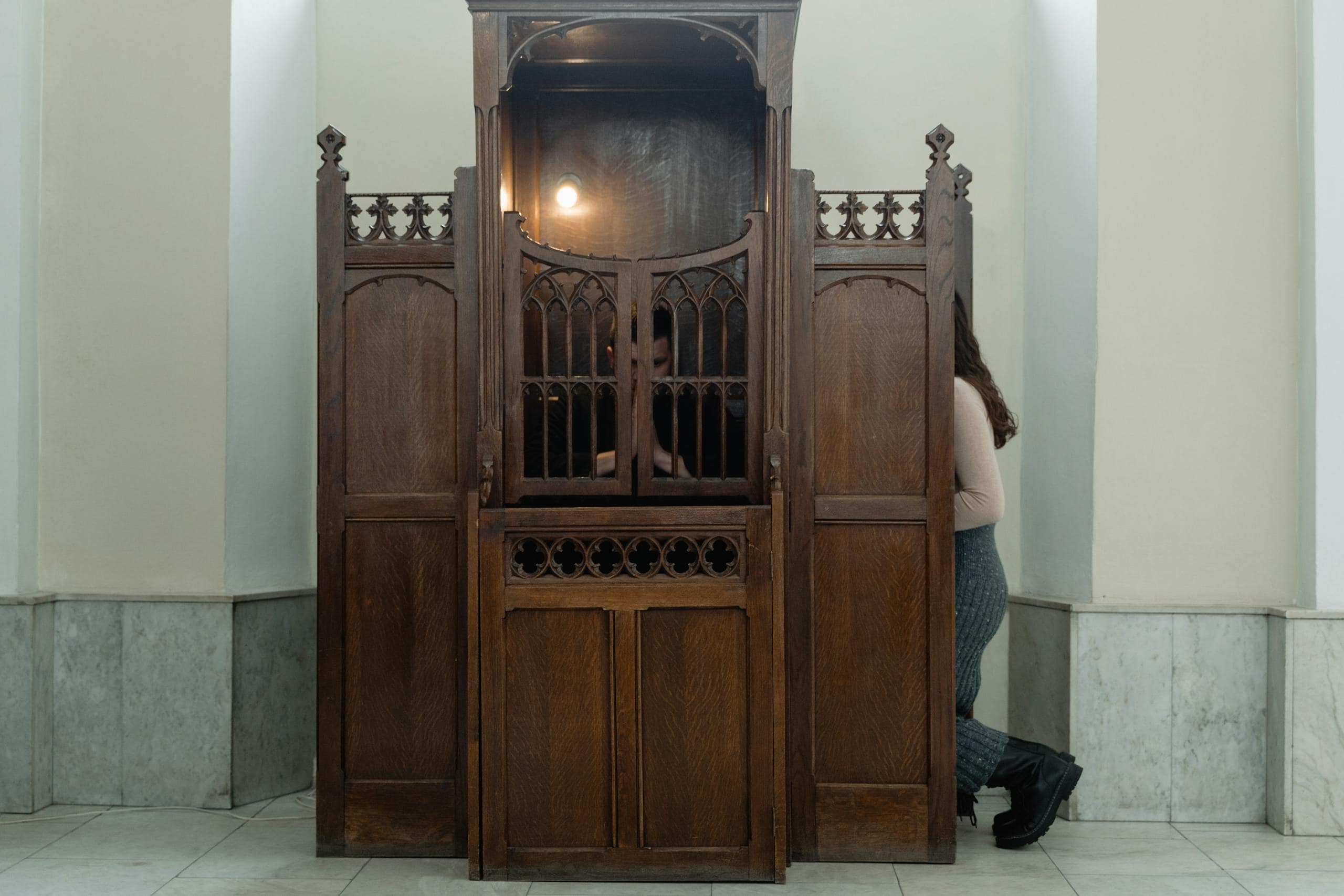
In the show, after talking to Jesus, viewers can see it dawn on Peter that he, too, was at fault. He recognizes his need for forgiveness first which then allows him to forgive Matthew. When we go to Jesus in the Sacrament of Reconciliation, Jesus gives us grace as he forgives us. Can we then practice using this same grace to help us forgive others?
Resolution:
Let’s resolve to think of one person to forgive every time we pray the Our Father. Let’s see if it takes seventy-seven times.
Read more about my thoughts on Confession in Ants in the Airstream.
If you want to get started on a morning prayer routine- I have the perfect book for you. And it is Free! I put together a prayer book of all of my favorite morning prayers and challenge you to spend a couple of your morning minutes each day with God. Get it here!